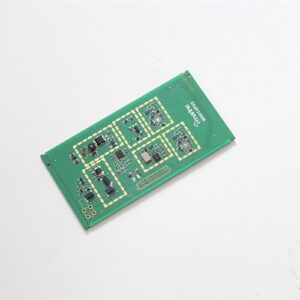



Key Features of Medical & Healthcare PCBA:
- High Reliability & Durability
Medical devices often operate in challenging environments — inside or outside the human body, and under wide temperature and humidity ranges.
Therefore, medical PCBA must provide extreme stability and long-term reliable performance. - Precision Manufacturing Technology
The production process includes:- Surface Mount Technology (SMT)
- Through-hole soldering
- Micro assembly
These guarantee accurate component placement and soldering, ensuring high precision and reliability.
- Strict Quality Control
Due to strict industry requirements, medical PCBA manufacturers must comply with:- ISO 13485 (Medical Device Quality Management)
- Additional medical-grade validation and testing standards
This ensures both product quality and patient safety.
- Complex Multilayer PCB Design
To support multifunctional and miniaturized medical devices, multilayer PCB designs are commonly used, improving layout density and overall performance. - High-Density, Low-Volume Assembly
Modern medical equipment is increasingly compact and portable.
As a result, medical PCBA must adopt high-density assembly techniques to reduce board size while maintaining functionality.
Medical & healthcare PCBA is a critical foundation of medical electronic devices — supporting systems such as diagnostics, monitoring, life support, imaging, therapy, and wearable health equipment.