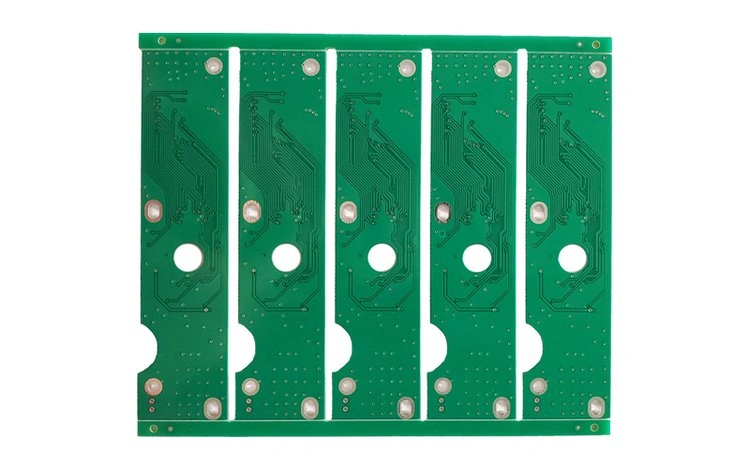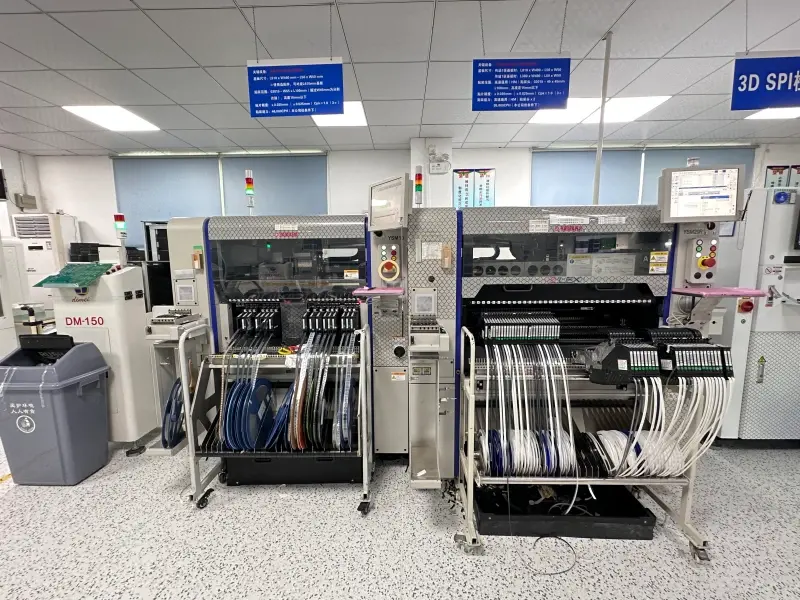



Picture this: You receive your long-awaited first batch of PCBAs, power them up for testing, and get no response. After costly diagnostics, you find the root cause is maddening—a critical capacitor footprint. Your design files specify 0402, but the boards are populated with 0603. You scour your emails, certain you specified it correctly. The vendor’s reply: “Sorry, we misunderstood.”
We’ve heard this story too many times. The core issue is often not technical capability, but “interpretation drift” across cultural contexts. At Philifast, we are more than your supply chain partner; we are your cultural and technical interpreter. Successful collaboration isn’t about avoiding all problems, but about building a communication system that leaves no room for them to hide. Here are three proven core strategies.
Strategy 1: Engineer Your Requirements — From Ambiguous Intent to Unmistakable Instruction
Asian manufacturing is renowned for excellent execution, but it hinges on receiving extremely clear, quantifiable instructions. One vague requirement invites ten different interpretations. This goes beyond language—it’s a difference in engineering mindset. Western engineers often define the “what” (e.g., “low power consumption”), while Asian factories require the “how” (e.g., “use LDO model XX with quiescent current <1µA”). Bridging this gap is the first critical step toward success.
Steps You Can Implement Immediately:
- Provide “Visual Context”: Beyond Gerber files, include a PCB render with critical areas highlighted in red. Use callouts like: “Impedance control critical here” or “3mm keep-out zone required in this area.” We once saw a board short-circuit because the request to “keep the antenna area clean” was interpreted as “remove all solder mask.” A single annotated diagram would have prevented this.
- Create a “Foolproof” Checklist: In your PO or work instruction, add a must-check QA section:
- Solder Mask Color: Green (Pantone 364C)
- Surface Finish: ENIG (Electroless Nickel Immersion Gold), 2-3μ” thickness
- Breakaway Tab Design: Executed per attached drawing “Panelization.dwg”
- IPC Class: Confirm manufacturing to IPC-A-600 Class 2 standards.
- Define the “Gray Areas”: Explicitly state which parameters are flexible (“If component XX is unavailable, accept alternative brands YY or ZZ”) and which are absolute show-stoppers (“No trace width adjustments on the RF path”).
Why This Works: This essentially transforms your Design Validation (DV) requirements into clear Production Validation (PV) checkpoints for your supplier. It shifts quality assurance from a subjective expectation to an objective, enforceable standard, effectively transferring quality control accountability to the production floor.
The Risk of Skipping This: Ambiguity will be resolved on the factory floor based on cost or production convenience, not your performance priorities. The result is often a product that fails to meet unspoken expectations, with little recourse for accountability.
How Philifast Acts as Your Bridge:
During project kick-off, our engineers conduct a complimentary in-depth DFM (Design for Manufacturability) review. We provide a bilingual report that not only flags potential issues but also “translates” your design intent into a process parameter sheet that a factory production supervisor can execute directly, eliminating misunderstanding at the source. For example, we translate a requirement for “good thermal performance” into specific copper weight recommendations, thermal via array patterns, and a list of components to shield during wave soldering.

Strategy 2: Formalize Your Process — Eliminate Information Black Holes
In cross-cultural, cross-time-zone collaboration, relying on memory or fragmented messages in chat apps is a primary cause of project derailment. You need to build a paper-trailed, traceable chain of responsibility.In a culture that values collectivism and avoids direct confrontation, a formal paper trail is not bureaucracy—it’s an essential safety net. It clarifies individual accountability (preventing “responsibility diffusion”), and protects both parties from future disputes.
Steps You Can Implement Immediately:
- Institute the “Meeting Minutes as Contract” Rule: Within 24 hours of any meeting, send minutes containing:
- Decisions: What did we decide? (e.g., Proceed with USB Connector Model A)
- Action Items: Who owns it? Deadline? (e.g., John to provide 3D model by Jan 20)
- Open Issues: What remains unresolved? (e.g., Final packaging pending client approval)
- Always end with: “Please confirm the above is accurate or provide corrections.”
- Establish a “Single Source of Truth” Dashboard: Use a simple shared tracker (e.g., Google Sheet) listing project milestones, current status (Green/Yellow/Red), owner, and latest notes. This is more effective than a hundred scattered emails. Key fields to include: “Component Procurement Status (MLCCs, Memory, etc.),” “SMT Line Scheduling,” and “Links to First Article Inspection (FAI) Reports.”
- Mandate Written Approval for Key Changes: For any Engineering Change Request (ECR) deviating from the original design, require explicit written confirmation (“Approved for execution”) via email or a change order form.This is your most critical lever for controlling cost overruns and schedule slips.
Why This Works: Process transparency eliminates information asymmetry, making vague assurances of “everything is on track” unacceptable. It forces potential issues into the open during the “yellow light” phase, allowing for proactive correction before they become “red light” crises.
The Risk of Skipping This: You become trapped in a reactive cycle of “chase-and-ask” communication, constantly following up for updates, only to receive generic assurances until a major delay emerges at the last minute.
How Philifast Acts as Your Bridge:
We act as your dedicated project coordination hub. We maintain and update a bilingual, dynamic dashboard for your project and send you a concise weekly status digest. When ambiguities arise, we proactively initiate clarification calls and ensure all outcomes are documented, keeping you in control of the project’s pulse.For instance, our dashboards automatically highlight any task at risk of delay and link directly to all relevant emails and documents, allowing you to trace the complete history of any issue with a single click.
Strategy 3: Cultivate a Partnership — From Fault-Finding to Joint Problem-Solving
When a board fails, the instinct is to assign blame: “What did you do wrong?” This puts the vendor on the defensive, encouraging concealment. The most effective approach is to bring them into the same trench. This is more than attitude—it’s a management strategy. Elevating your vendor from a “contractor” to a member of your “problem-solving coalition” unlocks access to their tacit process knowledge and internal data, which they might otherwise hesitate to share.
Steps You Can Implement Immediately:
- Use the “We” Framework to Initiate Issue Discussions:
· ·Don’t say: “Your soldering process caused cold joints.”
· ·Do say: “We are seeing a higher than acceptable rate of cold joints on Channel 3 of this PCBA batch. Can we jointly review the reflow profile data?”
- Involve Them Early in the Process: During the conceptual design phase, ask: “Based on your experience, is this layout test-fixture friendly for backend testing?” This not only prevents future issues but also fosters ownership.
- Conduct Joint Root Cause Analysis (RCA): After a failure, host a collaborative review focused not on blame, but on process: “Which inspection checkpoint let this through? What mistake-proofing (Poka-Yoke) can we add?”
Why This Works: It leverages the other side of “face” culture. When shown respect and granted shared responsibility, Asian partners often respond with remarkable loyalty and tenacity in problem-solving. You give them “mianzi” (face/respect), and they give you “lizi” (substantive results).
The Risk of Skipping This: A pure blame-oriented approach incentivizes suppliers to hide problems, provide misleading reports, or perform minimal rework without addressing the root cause, guaranteeing the issue will recur.
How Philifast Acts as Your Bridge:
We leverage our long-term local relationships and professional credibility to serve as a trust catalyst and impartial mediator. A Real-World Example: A client’s product recently failed vibration testing. Instead of a blame game, we facilitated a tri-party RCA call with the client’s and factory’s engineers. Focusing on data from X-ray and cross-section analysis, the team discovered a rare stress concentration point in the design that interacted poorly with the factory’s specific cleaning process. The solution involved a minor design tweak and a process adjustment—solving the problem permanently and strengthening the partnership.
Conlusion: Make Communication Your Strategic Advantage
Collaborating with Asian PCB vendors is not a game of persuasion, but a systematic effort to build a shared context. By engineering your requirements, formalizing your process, and cultivating a partnership, you transform communication from your greatest risk into your most reliable competitive advantage.
This system delivers direct business benefits: fewer revision spins, faster time-to-market, and more predictable total cost.
Think of these three strategies as a continuous workflow cycle: start with precision definition (Strategy 1), execute through transparent management (Strategy 2), and apply a collaborative spirit (Strategy 3) to tackle challenges and optimize the process. Each cycle builds a more resilient and efficient supply chain.
Ready to Transform Your Communication from a Challenge to an Advantage?