

Below is a clear, Western-friendly translation of your text. I kept the technical values and simplified the language so it’s easier to read.
Overview — two ways to classify holes
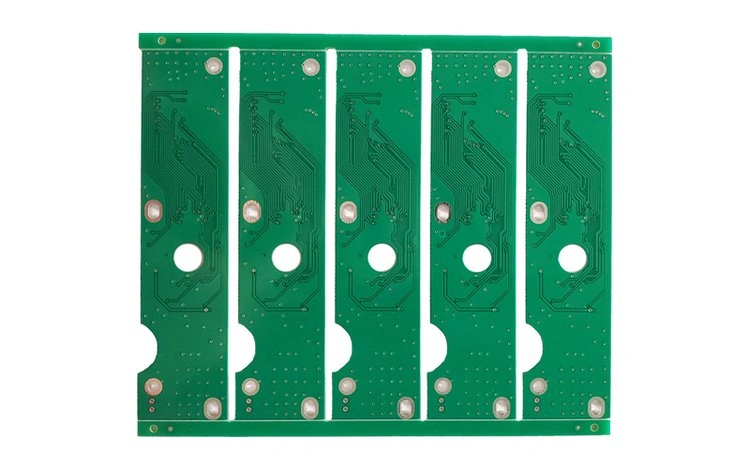
Holes on a PCB are usually described two ways:
- By plating
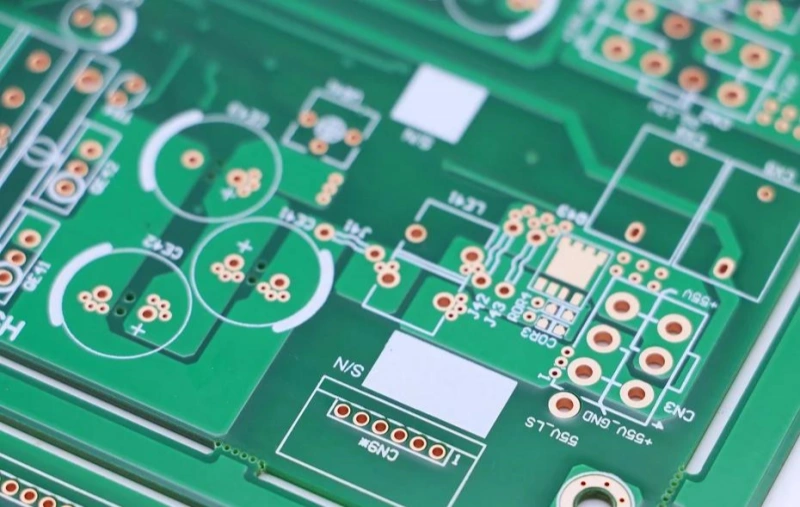
- Plated through-holes (PTH) — holes with copper plated on the barrel/wall.
- Non-plated through-holes (NPTH) — holes without plated barrel.
- By whether they will be soldered (this is the most important distinction for design)
- Solderable (to be soldered) — holes intended to receive solder and form electrical/mechanical connections.
- Non-solderable (not to be soldered) — holes used for mechanical mounting, wire pass-through, etc.
Designers must mark each hole with both attributes: whether it’s plated or not, and whether it will be soldered. That determines how to size the pad/annulus and whether special processing is required.
Key reference table (inch ⇄ mm)
| Item / rule | Typical value (inch) | Metric (mm) | Notes / when to use |
|---|---|---|---|
| Example finished hole (small via) | 0.008″ | 0.203 mm | Common small via/through-hole example. |
| Minimum finished pad diameter (example) | 0.031″ | 0.787 mm | Often quoted as a conservative minimum for a 0.008″ hole (manufacturer guidance). Use larger when possible. |
| Typical minimum annular ring (each side) | 0.006″ | 0.152 mm | Common DFM minimum (annular ring per side). Check manufacturer / IPC level. |
| Rule-of-thumb solderable pad | ≈ 2 × finished hole dia. | — | A quick rule: pad ≈ 2× hole diameter for many soldered leads — but validate vs. IPC/manufacturer for small holes. |
| Copper plating (barrel) — typical min (IPC guidance) | 0.00079″ — 0.00098″ | 20–25 µm | IPC gives typical minimum plating thickness ranges by class (Class 2 / Class 3). For higher reliability, choose thicker. |
| Common practical plating thickness used in fabs | 0.0008″–0.0030″ | ≈ 20–76 µm | Many fabs quote 18–50 µm typical; special/high-reliability boards use larger values. Confirm with your house fab. |
| Thermal-relief outer diameter rule (typical) | inner pad × 1.5 | — | Thermal-relief (spokes) reduce heat sinking; common guidance sets thermal outer ≈ 1.5× inner pad. Validate spoke width per current capacity. |
| NPTH minimum finished hole | 0.006″ | 0.152 mm | NPTH (no plating) often has a 0.006″ finished hole minimum for small mechanical holes. |
1 — Solderable holes
Solderable holes are the ones designers must pay most attention to:
- Plated through-holes (PTH) — the common case (includes vias and component lead holes).
- Non-plated holes that will be soldered — unusual, but if required they must be treated as solderable for pad sizing.
Designers must decide whether the pad is intended to be soldered or not. That decision affects whether the pad is sized for soldering or only for the minimum annulus required for manufacturing.
Note: If a pad is not intended for soldering, standard annulus / ring sizing can be used unless assembly requires otherwise.
2 — Minimum annulus (minimum pad ring)
The minimum annulus (pad ring) has two parts:
- The minimum requirement set by standards (IPC or other).
- Any additional designer-specified annulus.
Example values (based on common manufacturing processes):
- For a 0.008″ finished hole, the minimum finished pad diameter should be 0.031″.
- That 0.031″ is a minimum — don’t use it unless necessary. A safer choice is at least 0.002″ larger than the minimum.
These example numbers are for conventional processes and are intended as guidance.
3 — Plating and annulus thickness
Typical plating and annulus guidance:
- Effective copper plating thickness (barrel) is roughly 0.0025–0.0030″.
- For outer (external) pads, allow at least 0.002″ more annulus than the plating thickness.
- For inner (internal) pads, allow at least 0.001″ more annulus than the plating thickness.
(These rules give extra margin so the hole and pad remain reliable after plating and finishing.)
4 — Solderable plated through-holes — sizing rules
Most rules for plated holes also apply when they are soldered, but with a few important differences:
- External pads often need a larger surface area to help with heat dissipation during soldering (to avoid poor solder joints).
- For consistency, internal pads should match external pad sizing unless there’s a reason to simplify.
- Larger leads require more heat during soldering; therefore pads should grow proportionally with lead diameter so heat distributes evenly.
A typical acceptable pad size range for a soldered hole is:
- From the minimum annulus up to 2× the finished hole diameter.
- A common rule of thumb: soldered pad diameter ≈ 2× finished hole diameter.
Note: These values assume standard component lead materials; they may change with different materials.
5 — Thermal relief (thermal spokes)
Thermal reliefs are used to connect solderable pads to large copper planes without making soldering impossible:
- Thermal reliefs are small traces (spokes) that connect the pad to a plane. They typically look like a “+” or “×” with 3 or 4 spokes, often called spokes because they resemble bicycle spokes.
- The spokes reduce the heat-sink effect of the plane so the pad can be heated sufficiently for soldering.
- The total area of the spokes combined is usually designed to equal the pad diameter so the pad has adequate current carrying capacity while still allowing soldering.
- Thermal outer diameter (pad + spokes area) is commonly described as inner pad diameter × 1.5.
6 — Non-plated through-holes (NPTH)
There are two NPTH types:
- NPTH with a pad
- The pad may or may not be plated. If the pad is present and plated, the hole gets plated during the plating process.
- If the pad is not plated, the hole is typically drilled after plating — this adds cost.
- Because NPTH pads lack barrel plating, the pad must be large enough to provide mechanical support and adhesive area. IPC defines a minimum annulus of 0.006″ for non-plated pads; if the NPTH pad will be soldered, use a larger value.
- NPTH without a pad
- Used for mounting holes, screws, alignment holes, wire pass-throughs, etc.
- These holes require only mechanical sizing; plating or solder considerations do not apply.
7 — Practical recommendations (summary)
- Always mark on drawings whether each hole is PTH or NPTH and whether it is solderable.
- Avoid using absolute minimum pad sizes unless necessary—add at least 0.002″ margin where possible.
- Use thermal reliefs on pads that connect to large copper areas to make soldering practical.
- If an NPTH pad is not plated, expect additional drilling/processing costs.
- For solderable holes, a quick rule of thumb is pad diameter ≈ 2× finished hole diameter, but confirm with your manufacturer for special materials or assemblies.