

Introduction
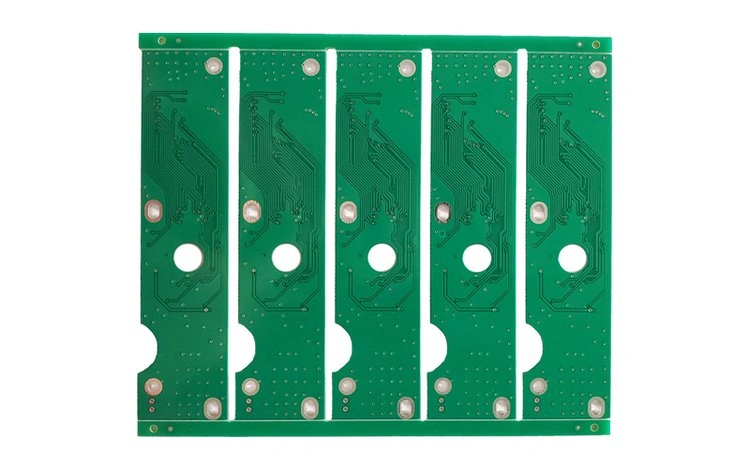
In double-sided and multilayer PCB production, copper surface oxidation is a serious problem. After copper deposition and whole-board plating, the copper on the board surface and inside holes, especially small holes, can oxidize during the time before pattern transfer. This oxidation harms the quality of pattern transfer and subsequent plating. Inner layers also show more false AOI points because of oxidation, and this lowers AOI test efficiency. This issue has long been hard for the industry. Below we discuss solutions and the use of a professional copper surface anti-oxidation agent.
Current Methods and the Status of Copper Oxidation in PCB Production
1.1 Anti-oxidation After Copper Deposition and Whole-Board Plating
After copper deposition and whole-board plating, boards usually go through the following steps:
- Treat with 1–3% dilute sulfuric acid;
- Bake at 75–85°C to dry;
- Rack or stack and wait for dry film or wet film to do pattern transfer;
- During this waiting period, boards are stored for 2–3 days or sometimes 5–7 days;
- By then, the board surface and hole copper are often already dark and heavily oxidized.
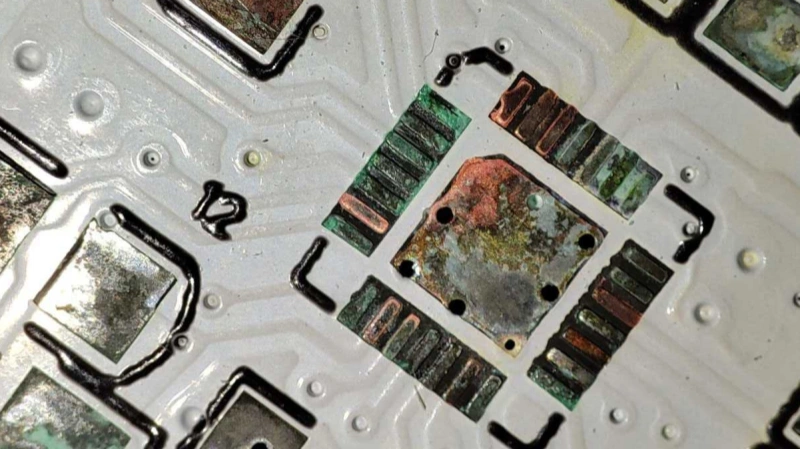
In the pre-treatment before pattern transfer, we usually use “3% dilute sulfuric acid + brushing” to clean the board copper. For the hole copper, only acid washing can act on it. Small holes are hard to dry well during the baking step. Small holes often hold moisture. Their oxidation is usually worse than the board surface. Simple acid wash can’t remove the stubborn oxide inside small holes. This can cause boards to fail after pattern plating and etching because the hole copper is gone.
1.2 Anti-oxidation for Inner Layers of Multilayer Boards
After inner layer circuits are done, they go through developing, etching, stripping, and 3% dilute sulfuric acid treatment. Then the inner layers are stored and moved with separator film while waiting for AOI scan and tests. Even with careful handling, the board surface still gets marks like fingerprints, stains, and oxidation spots. AOI scanning then shows many false points. AOI testing must check all scanned points, including false ones, so AOI test efficiency drops a lot.
Discussion on Introducing Copper Surface Anti-oxidation Agents
Many PCB chemical suppliers now offer different copper surface anti-oxidation agents for production. Our company also has a similar product. This product is not the final copper surface protection like OSP. It is an anti-oxidation chemical meant for use during PCB production. Its main working principle is that organic acids form covalent and coordination bonds with copper atoms. They alternate and form chain-like polymers on the copper. This creates a multi-layer protective film on the copper surface. The film keeps the copper from redox reactions and from producing hydrogen, so it prevents oxidation.
From our production use and tests, this copper anti-oxidation agent has the following advantages:
- The process is simple, it fits many uses, and it is easy to operate and maintain;
- It is water-soluble and free of halides and chromates, so it is better for the environment;
- The protective film it forms is easy to remove with standard “acid wash + brushing”;
- The film does not affect solderability and it almost does not change contact resistance.
2.1 Application After Copper Deposition and Whole-Board Plating
In the post-plating process, replace the “dilute sulfuric acid” step with a professional “copper anti-oxidation agent.” Keep other steps like drying and racking the same. After this treatment, a very thin and even protective film forms on the board surface and inside holes. The film fully isolates the copper from air and stops sulfides in the air from touching the copper. This prevents the copper from oxidizing and turning black. Normally, this protective film can keep boards safe for 6–8 days. That fully meets common factory turnaround times .
Before pattern transfer, just use the usual “3% dilute sulfuric acid + brushing” to quickly and fully remove the anti-oxidation film from both the board surface and the holes. This step does not affect later processes (see Figure 3).
(Figure 3: After anti-oxidation and acid wash, left for 24 hours)
2.2 Application for Inner Layers of Multilayer Boards
Use the same program as usual. Simply replace the “3% dilute sulfuric acid” step in the production line with the professional “copper anti-oxidation agent.” Keep drying, storage, and transport the same. After this treatment, the board surface also gets a thin and even protective film. The film isolates the copper from air and stops oxidation. It also prevents fingerprints and stains from touching the board surface. This reduces false AOI points and improves AOI test efficiency.
AOI Scan and Test Comparison: Dilute Sulfuric Acid vs Copper Anti-oxidation Agent
Below is a comparison of AOI scan and test results for inner layer boards of the same model and same lot. Each group had 10 panels (10PNLS). One group used dilute sulfuric acid, the other used the copper anti-oxidation agent.
Notes from the test data:
- The number of AOI false points on the inner layers treated with the copper anti-oxidation agent is less than 9% of the false points on the boards treated with dilute sulfuric acid;
- The number of AOI-tested oxidation spots on inner layers treated with the copper anti-oxidation agent is 0; the same measure for boards treated with dilute sulfuric acid is 90.
Summary
As the PCB industry grows and product levels rise, problems caused by oxidation — such as small-hole copper loss scrap and low AOI test efficiency for inner and outer layers — need strong solutions. The use of copper anti-oxidation agents helps solve these issues well. We believe that copper anti-oxidation agents will become more common in PCB production.