


Are you planning to build your own PCB (printed circuit board)? In any design, you will deal with parts placement, routing practice, stackup management, and signal and power integrity. You can say thousands of engineers help make these steps smooth.
A material selection guide is a good start for beginners. A typical PCB has one or more copper layers. Those copper layers are laminated between thin sheets of non-conductive substrate. The PCB is the physical base where electrical parts, conductive traces, pads, and other functional features sit. In this article, we will look into the materials and design points for each PCB layer: silkscreen, soldermask, copper, and substrate.
Why you must think about PCB materials
When you choose PCB materials, you must consider heat, mechanical, electrical, and chemical properties.
For heat, check how hot the parts can get and how heat spreads across the board during peak work. For mechanical properties, think about the enclosure and form factor, and about stiffness or flexibility, especially for rigid-flex boards.
Electrical properties relate to dielectric needs such as impedance, signal integrity, and loss. The design engineer must balance these across the board or across the whole system. For product life, chemical properties like moisture uptake matter (for example, sensors in a humid farm IoT use case). Flammability is also important. Environmental rules and sustainability limits will also shape your material choices.
Silkscreen (legend)
Silkscreen is the layer that shows part names, polarity marks, logos, and other text on the board. The name comes from screen printing. The main purpose of the silkscreen is to help assembly and identification. Polarity, part location, and small notes are vital for correct assembly.
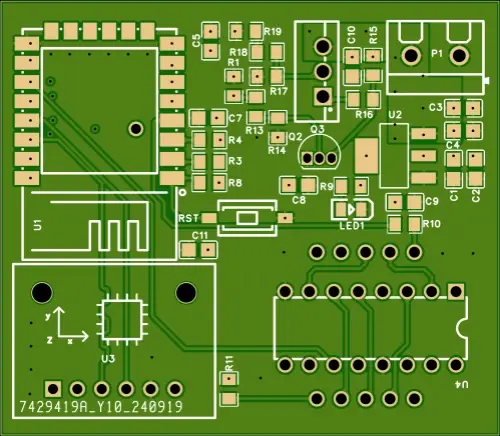
Common silkscreen methods
Liquid Photo Imaging (LPI): finer print, uses UV-cure ink, but slower.
Direct Legend Printing (DLP): faster, uses inkjet-style printing and acrylic ink.
From small reference marks to UL approval numbers, the rule of thumb is to use ink that contrasts with the baseboard color. White is most common, but many colors exist. It is rare to use more than one silkscreen color on a single board.
Soldermask
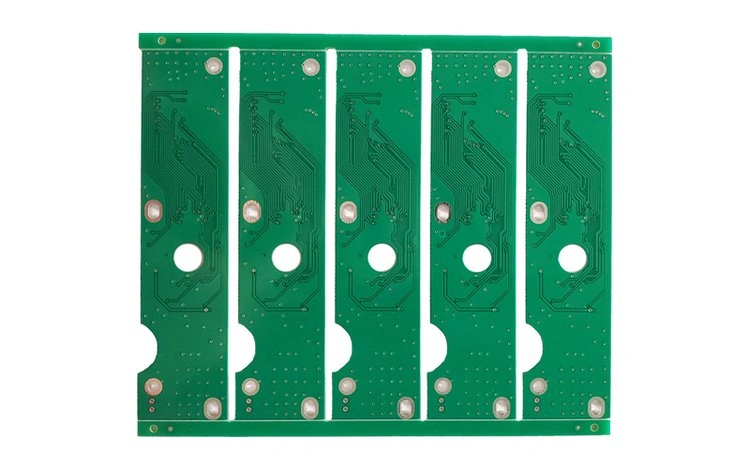
Soldermask is the polymer layer on top of the copper foil. It gives the PCB the classic green look, though color can vary. As the name implies, the mask prevents solder migration and helps makers place solder only on exposed features like annular rings and SMD pads. The mask also physically isolate copper traces so they do not touch solder, metal parts, or other conductive items, and it helps prevent oxidation.
Soldermask types
Epoxy liquid: the cheapest mask. It is applied by screen printing and is thermoset.
Liquid photoimageable soldermask (LPSM / LPI): UV-curable ink used for boards with complex surface features. It is exposed and developed. LPI gives good coverage on irregular surfaces.
Dry film photoimageable soldermask (DPSM): for flat boards, a dry film is vacuum-laminated, then exposed and developed. This gives uniform thickness but only works on flat panels.
Copper-Clad Laminate (CCL)
Under the soldermask is the copper-clad laminate (CCL). A CCL has two parts:
Copper foil
Copper foil: the thin layer of conductive copper. Common copper manufacturing types are electrodeposited (ED) and rolled annealed (RA). There are standard naming types like STD (standard), ANN (annealed electrodeposited), and AR (rolled). ED and RA have different mechanical and bonding properties.
Substrate (base material)
Substrate (base material): the non-conductive layer that gives strength and support. The common one is FR-4 — glass-fiber-reinforced epoxy with flame retardant. FR-4 has many grades depending on performance, flammability, and reinforcement. When people say two-layer or double-sided board, they mean a CCL with copper on both top and bottom. Standard multilayer boards are built by stacking two or more double-sided panels with insulating prepreg between them. That is why standard multilayers are usually sold with an even number of layers. More layers give more ground planes and help distribute power and reduce noise. The only real downside of more layers is cost.
Future of PCB materials
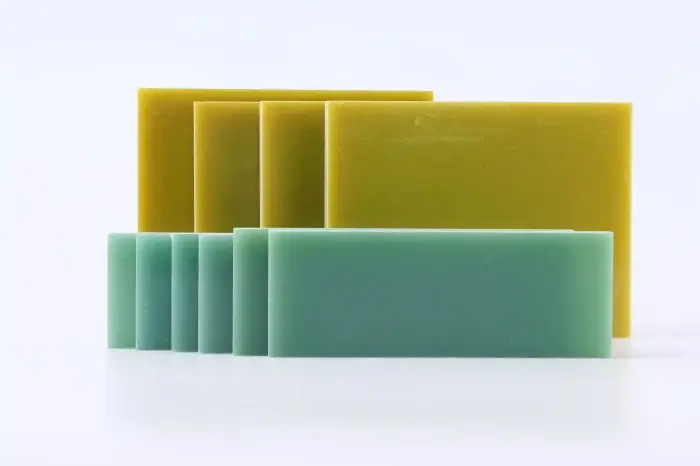
Most small changes in silkscreen ink or soldermask will not make news. The big innovation is usually in CCL and substrate materials.
Demand for smaller and lighter boards, such as in mobile devices, drives more multilayer designs. These allow more features in less space.
Enhanced epoxy systems, such as products marketed as Getek, Megtron, N4000-13, and FR-408, show better performance than standard FR-4 in lowering dielectric constant (Dk) and loss tangent. High-performance materials like Asahi Glass A-PPE, Nelco N4000-13 SI, and Rogers 4350B give clear gains in lower Dk, tighter impedance control, and lower signal loss.
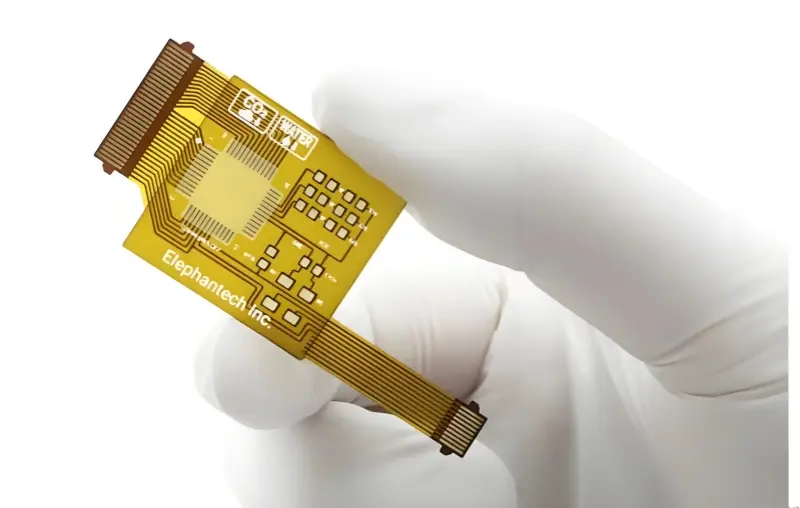
For flexible PCBs, CCL made from polyimide (PI) or polyester can be used. Regulations such as RoHS push for higher heat resistance and reliability. Halogen-free copper clad boards limit chlorine and bromine and often meet specific ppm thresholds. For example, halogen-free definitions commonly set chlorine and bromine limits near 900 ppm each, and a total halogen limit near 1500 ppm. These limits help reduce toxic emissions and aid recycling.
Quick notes on copper foil types
Electrodeposited (ED) copper foil is made by electroplating copper onto a rotating drum and then peeling it off. It usually has a matte bond side and a smooth outer side. ED foil is common in standard PCBs and gives good bond to the laminate.
Rolled annealed (RA) copper foil is rolled and annealed, giving better flexibility and high conductivity along the roll direction. RA foil is more suited for flexible circuits and for designs that need bendability. Choose ED or RA based on bend needs and copper handling.
Table — authoritative material data (quick reference)
| Material / Type | Typical key numbers | Notes |
|---|---|---|
| FR-4 (typical IPC grade) | Tg ~130–170 °C; dielectric constant Dk ~4.2 @ 1 MHz | Standard glass-epoxy CCL |
| Rogers RO4350B | Dk ≈ 3.48; loss tangent (Df) ≈ 0.0037 | For RF/microwave, low loss, consistent Dk |
| Nelco / N4000-13 SI | Tg > 210 °C; lead-free assembly compatible; low loss | Enhanced epoxy for signal integrity and high temp |
| Halogen-free limit (IEC) | Cl ≤ 900 ppm; Br ≤ 900 ppm; total halogen ≤ 1500 ppm | Common industry threshold for halogen-free boards |
| Copper foil types | ED / RA | ED common for standard boards; RA better for flexibility |
Practical tips for choosing materials
Start with the application. If you design RF or high-speed digital, look for low-loss, low-Dk materials. If you make a rugged consumer board, FR-4 is usually fine.
Check thermal limits. For lead-free reflow, you may need materials that can survive higher peak temperatures. Some N4000-13 type materials can handle higher reflow temps and show Tg > 210 °C.
Think about manufacturability. Some high-frequency substrates need special handling. Choose materials with data sheets that match your board process and assembly house capabilities.
Consider environmental rules. If your product will sell in regions with strict rules, choose halogen-free and RoHS-compliant laminates.
Talk to your board house. They know which CCLs they can source and process well. Cost rises when you move from standard FR-4 to specialty laminates.
Closing notes
Material selection is not one choice only. You balance heat, mechanical needs, electrical needs, cost, and rules. Use data sheets and IPC/IEC references when you pick materials. For multilayer designs, remember that extra layers help power distribution and EMI but add cost. For flexible designs, pick RA foil and flexible prepregs.
For professional support or engineering help, visit Contact Us.